How Does a Spring Starter Work? Mechanical (Wind-Up) Engine Starters Explained
A spring starter is a mechanical engine starter that cranks a diesel engine using energy stored in a wound coiled spring, with no battery, compressed air or hydraulic supply. You wind it by hand, and that stored energy turns the engine over. Here is how it works, and where mechanical starting earns its place.
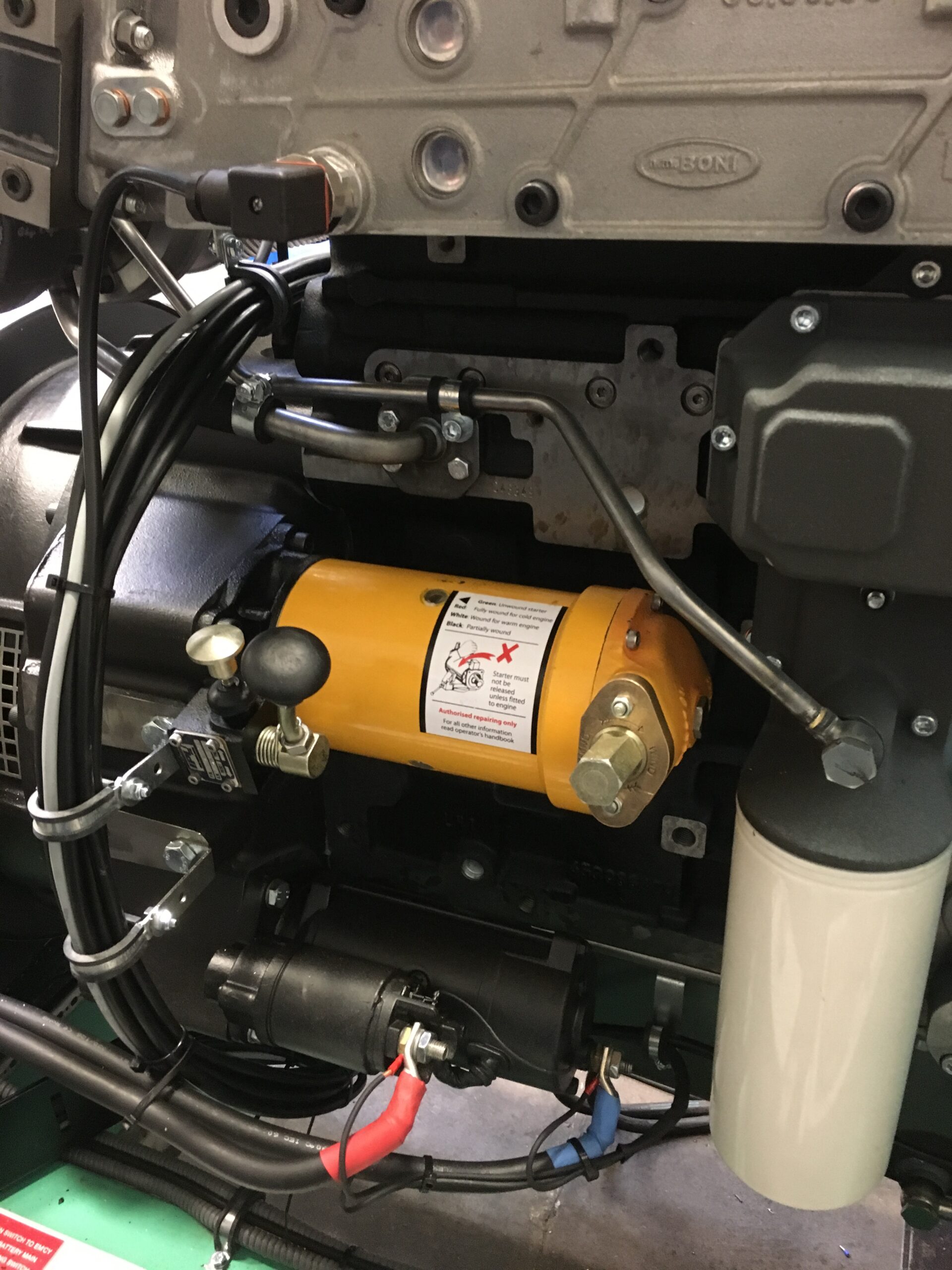
This completes our set of non-electric starting guides, alongside how an air starter works and how a hydraulic engine starter works. All three crank an engine without an electrical supply, but the spring starter is the only one that needs nothing stored in advance, no charged battery, no compressed air, no hydraulic pressure. It makes its own energy the moment you wind it.
How a Spring Starter Works
Every engine starter has the same job: turn the engine over fast enough, and for long enough, that it fires and runs on its own. A spring starter does that in two stages. First you store energy in a heavy spring. Then you release it in a single controlled burst to crank the engine.
Storing the energy
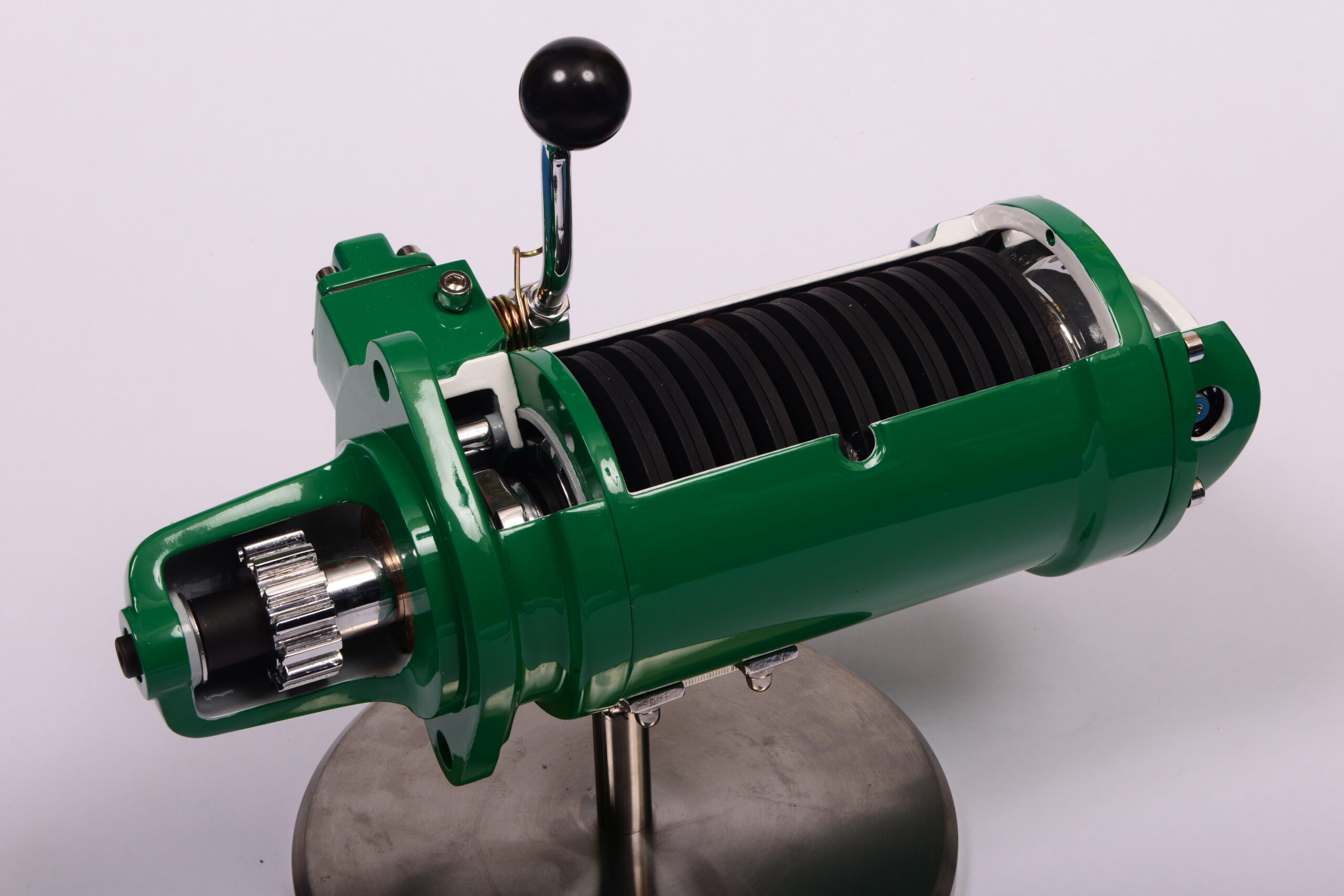
Inside the starter is a large coiled, or spiral, spring. Using a detachable crank handle, you wind that spring against its own tension, and each turn loads it with more potential energy. It takes a set number of turns by hand to reach a full charge, and on many units the same job can be done with a cordless drill to make it quicker and easier. Once wound, the starter simply holds that energy. It can sit fully charged for as long as you like, in any weather, with nothing connected to it, ready to use at a moment's notice.
Releasing it to crank the engine
When you operate the release lever, the spring unwinds rapidly and drives a pinion gear. The pinion engages the engine's flywheel ring gear and spins it hard enough to start the combustion cycle. The moment the engine fires and runs faster than the starter, the pinion disengages, exactly as it would on any inertia starter. If the engine does not catch on the first attempt, you simply re-wind the spring and try again. There is no recharge time to wait for and no external supply to top up.
Why It Works So Well on Diesel Engines
Compression-ignition engines are particularly well suited to mechanical starting. Once a diesel is running it needs no electrical system to keep going, so it can be started and run with no battery present at all. That is the whole reason mechanical spring starting has been trusted for decades on engines where an electrical start simply cannot be relied on, from lifeboats to emergency generator sets. The starter gives the engine a means of firing up that is completely independent of the rest of the installation.
Air, Hydraulic or Spring: How They Compare
Spring starting is one of three non-electric routes to cranking an engine. The difference between them comes down to what each one draws on for its energy.
| Type | Stores energy as | Best suited to |
|---|---|---|
| Spring | A wound mechanical spring | Smaller diesels, and emergency or remote engines with no power source of any kind |
| Air (pneumatic) | Compressed air or gas | Large engines and hazardous areas with an air supply already on hand |
| Hydraulic | Stored hydraulic pressure | Mobile plant and sites that already have hydraulic power available |
Air and hydraulic starters both deliver very high cranking torque, which is why they suit large engines, but each depends on a stored supply being charged and available. The spring starter needs none of that. That total independence, at the cost of being a hand-wound, smaller-engine solution, is exactly what makes it the right answer in the situations below.
When to Choose a Spring Starter
Mechanical spring starting tends to be the right call when one or more of these is true:
- There is no power source at all on the installation, no battery, air or hydraulic supply to rely on.
- You need an emergency or backup start, an independent means of firing the engine if a primary electric starter fails.
- It is a black start or dead-ship situation, where the engine must come to life with everything else shut down.
- The engine is remote or unmanned, where regular maintenance and battery charging cannot be counted on.
- Conditions are cold or harsh, where batteries lose performance at exactly the moment cranking demand is highest.
- The engine is small to mid-size. Powerstart's SureStart spring starters suit most diesel engines from roughly 0.5 to 14 litres, given the space to fit the unit.
Where spring starting proves itself: it is a mainstay on lifeboats, and on small standby, remote and emergency engines, the kind that may sit unused for months and then have to start on demand. On marine lifeboats, regulations call for a means of starting that does not depend on the ship's power, and a wound spring answers that directly.
In our experience, the engines that most often catch people out are the ones that are run the least. A spring starter removes the single biggest variable, a flat or failed battery, from the equation entirely, because there is no battery in the starting path to begin with.
Spring Starters in the Powerstart Range
Powerstart's spring starters, including the SureStart range, crank the engine from a fully wound spring using a simple detachable handle, and are built to sit ready for years between uses. They are tough, self-contained and need no external power, which is what makes them such a dependable last line of defence on a critical engine. Explore the full spring starter range to match a unit to your engine, or talk to us about the right choice for your application.
Spring Starter FAQs
How do you wind a spring starter?
You wind the coiled spring using a detachable crank handle, turning it a set number of times to store energy. On many units the same job can be done with a cordless drill to make it quicker. Once wound, the starter holds the charge until you operate the release lever to crank the engine.
What size engine can a spring starter start?
Spring starters suit small to mid-size diesels. Powerstart's SureStart range starts most diesel engines from roughly 0.5 to 14 litres, provided there is space to fit the unit.
Do you need a battery for a spring starter?
No. A spring starter is fully mechanical and needs no battery, compressed air or hydraulic supply. That independence is why it is used for emergency, remote and dead-ship starting.
How is a spring starter different from an air or hydraulic starter?
All three are non-electric. A spring starter stores energy in a wound spring and needs nothing supplied in advance, while air and hydraulic starters draw on stored compressed air or hydraulic pressure and deliver higher cranking torque for larger engines.
Need a Non-Electric Way to Start Your Engine?
Tell us your engine make, model and application, and we will recommend the right spring, air or hydraulic starter.
View Spring Starters