
How Does an Air Starter Work? Air Turbine (Pneumatic) Starters Explained
An air starter cranks an engine using nothing but compressed air or gas. No battery, no electrical supply, no spark. That simple idea is why pneumatic starting has been the trusted choice on large and hazardous engines for decades. Here is how it works, and when it is the right call.
This is a companion to our guide on how a hydraulic engine starter works. Both are non-electric methods of cranking an engine, but they draw on very different power sources. If hydraulic starting uses fluid pressure, air starting uses compressed air or gas, and that changes where each one fits.
How an Air Starter Works
Every engine starter has the same job: turn the engine over fast enough, and for long enough, that it fires and runs on its own. An air starter does that on compressed air or gas, rather than an electric motor and battery. The airflow is converted into rotation, that rotation drives a pinion gear, and the pinion engages the engine flywheel to crank it until it starts.
The air supply is held in a receiver or cylinder bank. When the start is triggered, the air is released through the starter at high flow, the starter converts that airflow into rotation, the pinion engages the flywheel, and the engine turns. Once the engine fires, the air supply is cut and the pinion disengages.
Air Turbine Starters
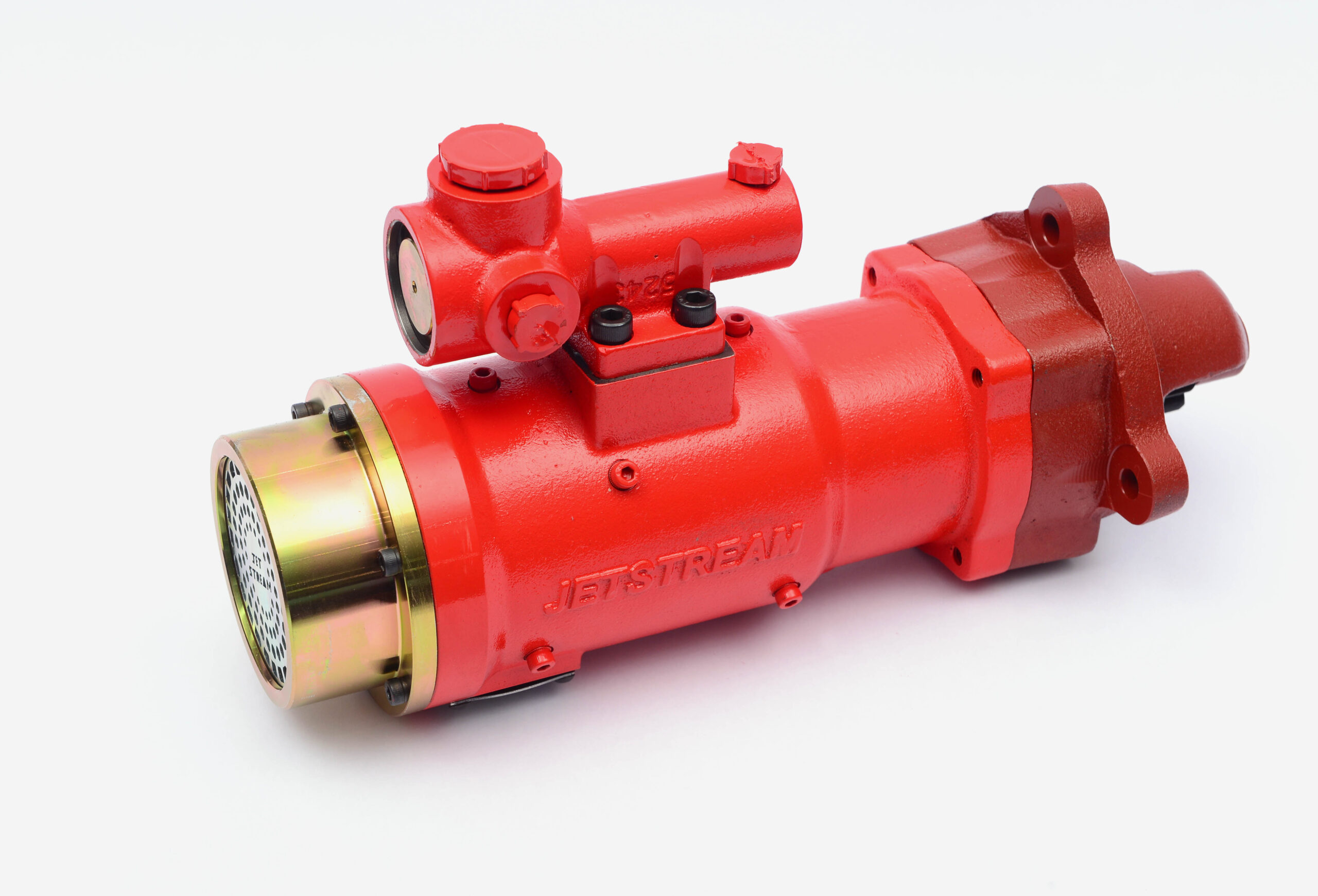
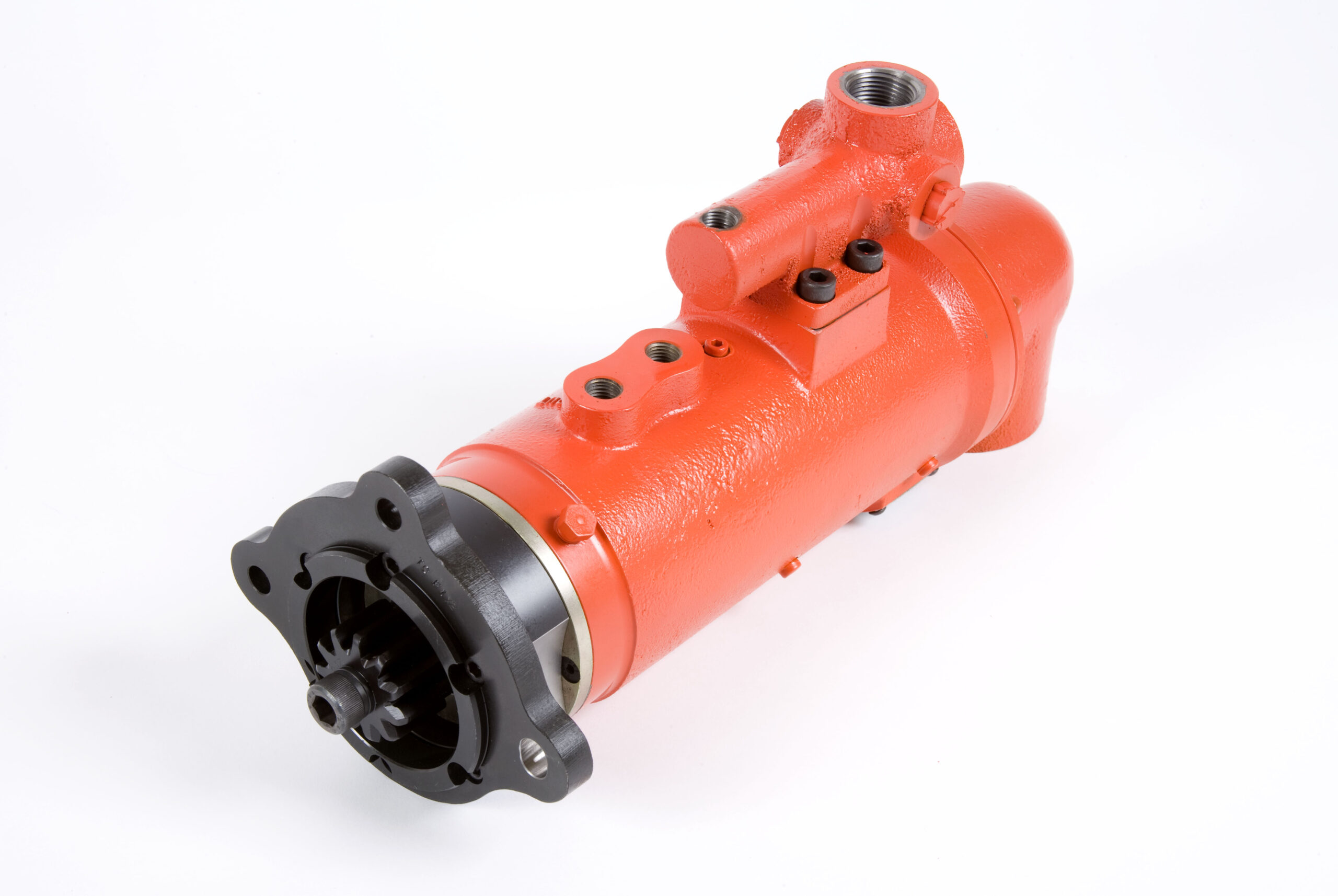
In a turbine air starter, compressed air enters the unit and is directed by inlet nozzles onto a primary turbine wheel, spinning it at high speed. As the air passes over each successive wheel it keeps building speed, driving the shaft at anywhere from 25,000 to 40,000 rpm. A planetary gearbox just in front of the turbine then reduces that by around 10:1, trading speed for the cranking torque the engine needs. The result is a high power-to-weight ratio and smooth delivery, which is why turbine designs suit large engines that need serious cranking effort from a compact unit. Powerstart's Jetstream 4 and Jetstream 5 are air turbine starters built for exactly this duty.
Vane Air Starters
The other common design uses a vaned rotor rather than a turbine. Compressed air pushes against the vanes to turn the rotor directly, which tends to give strong low-speed torque. Both types share the same headline benefit of cranking an engine with no electrical input at all.
Air, Hydraulic or Spring: How They Compare
Air starting is one of three non-electric routes, and the best choice depends on what power you have available and where the engine sits.
| Type | Power source | Best suited to |
|---|---|---|
| Air (pneumatic) | Compressed air or gas | Large engines, hazardous areas, frequent starts |
| Hydraulic | Hydraulic system pressure | Mobile plant and sites with existing hydraulic power |
| Spring | Stored mechanical energy | Remote or unmanned engines with no power source |
Not sure which fits your engine? Our engine starting solution finder walks you through it in a couple of minutes.
When to Choose an Air Starter
Air starting tends to be the right answer when several of these are true:
- Compressed air or gas is already available on the installation.
- The engine is large and needs high cranking torque from a compact, lightweight unit.
- The environment is hazardous, where a starter with no electrical ignition source is a major advantage. Many air starters are offered in ATEX certified form.
- Starts are frequent or repeated, where air starters handle the duty cycle well.
- Conditions are extreme, since pneumatic starting performs reliably across a wide temperature range.
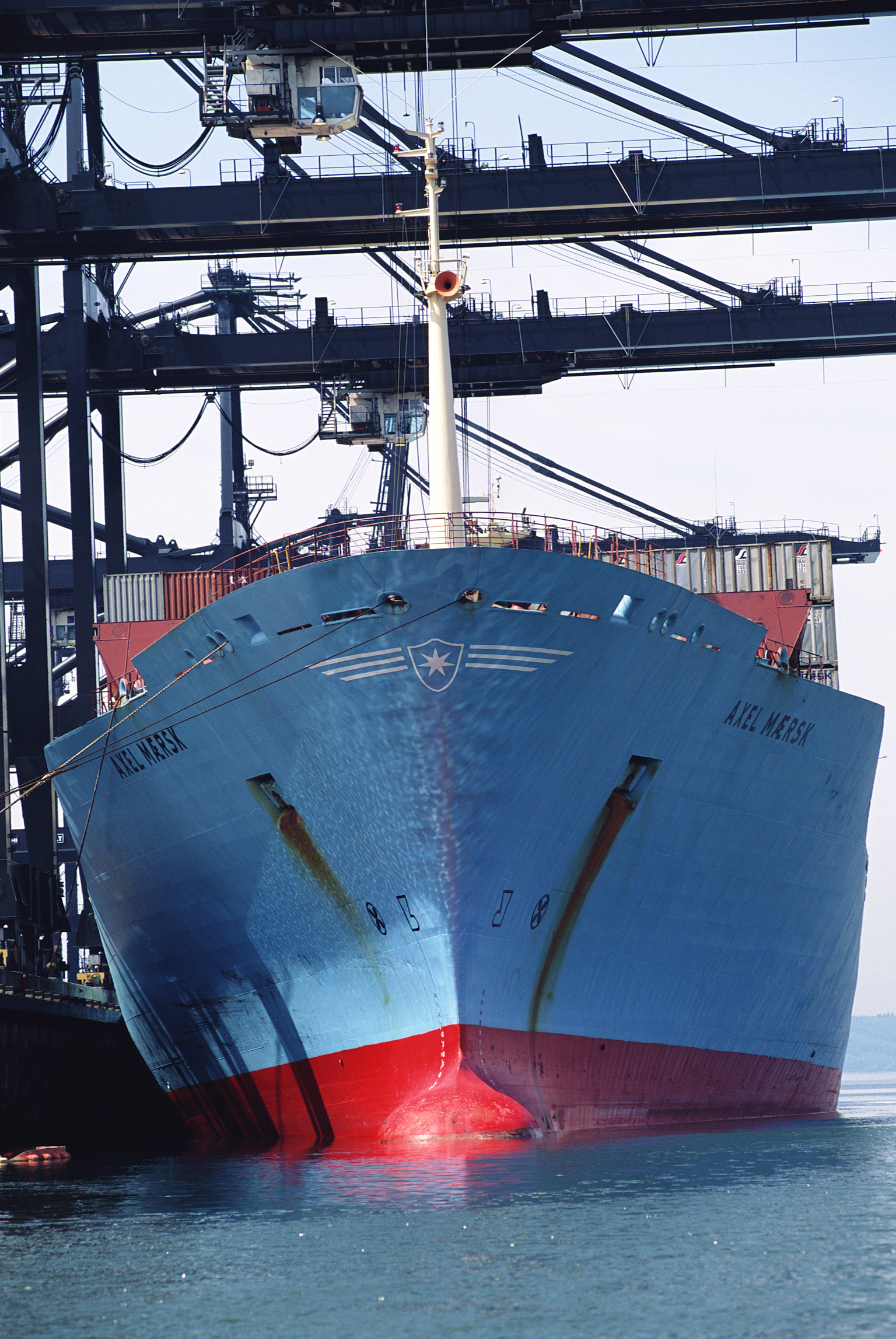
Where air starters earn their keep: they are a mainstay across oil and gas and marine applications, where engines are large, supplies of compressed air are on hand, and reliable starting is not negotiable.
To see the full pneumatic range and torque ratings, visit our pneumatic starter motors category.
Not Sure Which Starter Your Engine Needs?
Tell us the engine and the application, and we will point you to the right pneumatic, hydraulic or spring solution.
Find Your Solution