
How does a hydraulic engine starter work?
Hydraulic starters are a proven choice for cranking diesel engines where electrical starting is unreliable, batteries are impractical, or the operating environment demands a more rugged solution. They use pressurised hydraulic fluid to deliver high torque in a compact package, making them well suited to marine, mining, and standby power applications.
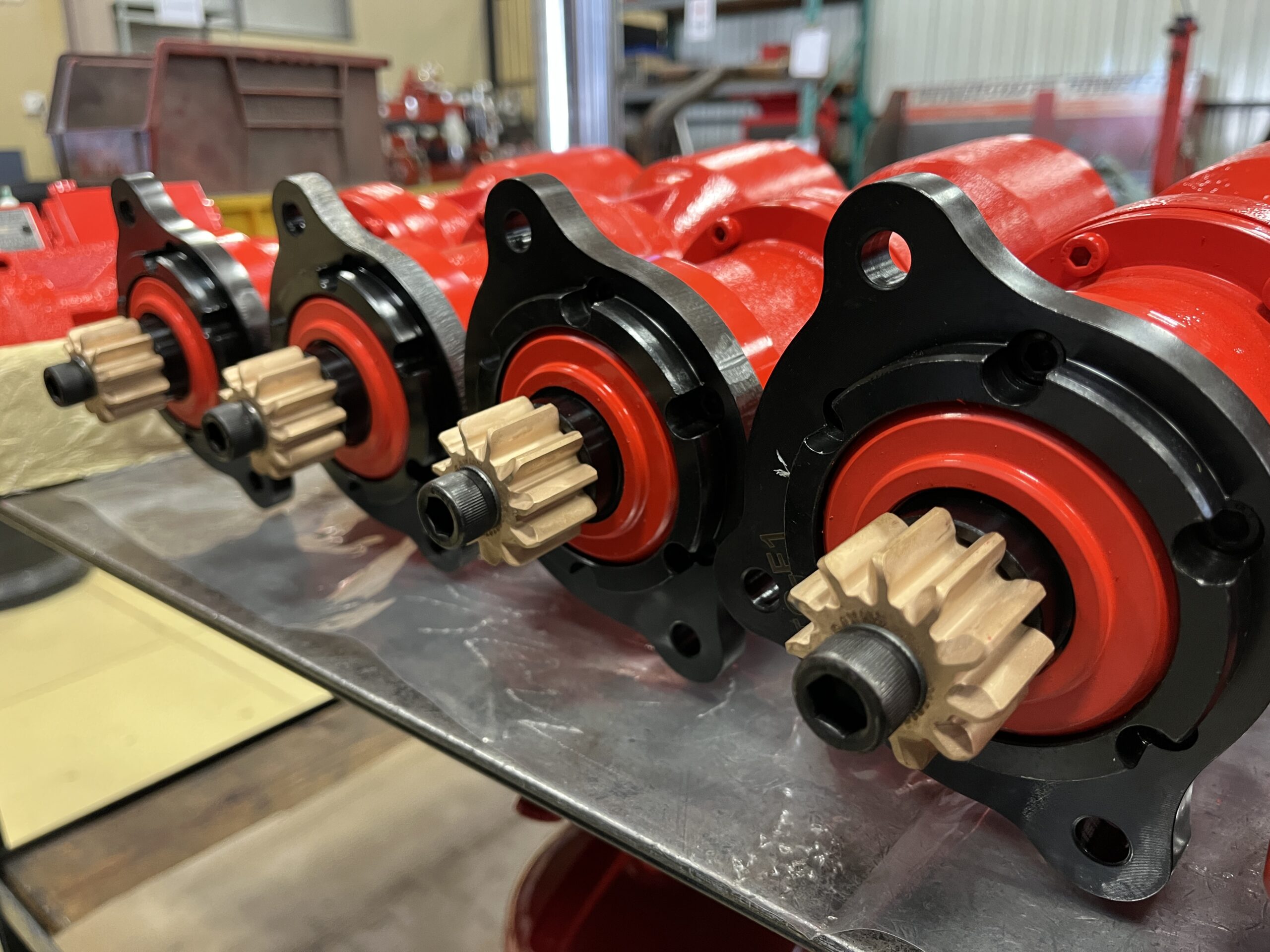
The basic principle
A hydraulic starter motor converts the energy stored in pressurised fluid into rotational force. That force is transferred through a pinion gear to the engine's flywheel ring gear, cranking the engine until it fires.
Unlike an electric starter, which draws power from a battery, a hydraulic starter draws power from a charged accumulator. This makes it independent of electrical supply and capable of repeated starts in cold conditions, where battery performance drops sharply. It also means the system can be recharged manually with a hand pump, giving you a guaranteed start even if every other power source on board has failed.
Key components
A typical hydraulic starting system is built from five main parts:
- Hydraulic starter motor. The motor itself, which drives the pinion that engages the engine flywheel.
- Accumulator. A pressure vessel, usually piston or bladder type, that stores hydraulic fluid under high pressure ready for use.
- Charging pump. Used to pressurise the accumulator. Options include a hand pump for fully manual operation, an engine-driven pump that recharges automatically once the engine is running, or an electric pump where mains or auxiliary power is available.
- Control valve. Releases the stored fluid from the accumulator to the motor when the operator initiates a start.
- Reservoir and filtration. Holds the return fluid and keeps it clean, protecting the system from contamination and wear.
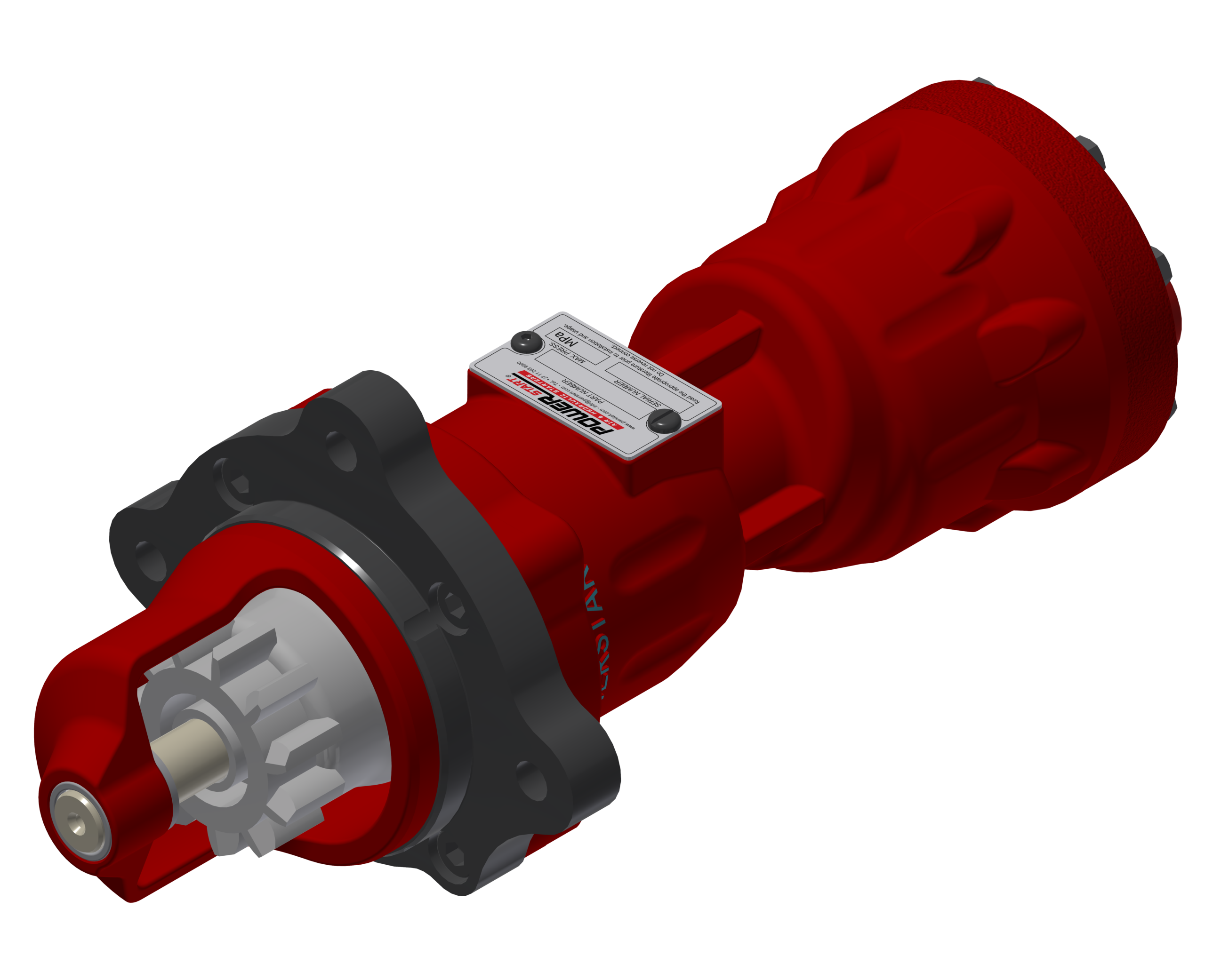
How a start cycle works
- The accumulator is charged to its working pressure, commonly between 200 and 350 bar depending on the system.
- The operator activates the control valve, releasing pressurised fluid from the accumulator.
- The fluid drives the hydraulic motor, which spins the pinion gear.
- The pinion engages the flywheel ring gear and cranks the engine.
- Once the engine fires, the pinion disengages and the motor stops.
- Spent fluid returns to the reservoir, ready to be repumped back into the accumulator for the next start.
The whole cycle typically lasts only a few seconds. Because the energy is stored mechanically rather than chemically, the system is ready to start again as soon as the accumulator is recharged.
Where hydraulic starters are used
Hydraulic starters are commonly specified where one or more of the following apply:
- An existing hydraulic system is already in place, such as on mobile plant, construction equipment, or a vessel.
- High cranking torque is needed in a compact installation.
- Repeated, reliable starts are required without depending on batteries.
- Cold weather, vibration, or remote locations make electrical starting unreliable.
- The site needs a fully manual backup option, with a hand pump as the failsafe.
Typical applications include marine main and auxiliary engines, offshore oil and gas platforms, mining machinery, drilling rigs, and standby diesel generators in power generation applications.

ATEX-rated hydraulic starters
For installations in potentially explosive atmospheres, such as offshore oil and gas platforms or mining operations, ATEX certification is essential. The Powerstart M22 and M28 are the only models in the M-series range with full ATEX approval, making them suitable for hazardous area applications.
For more on hazardous area certification and what it means for engine starting, see our overview of ATEX-certified starting systems.
Why choose hydraulic over pneumatic or electric?
Hydraulic starters give you very high torque from a compact unit and can be used wherever a hydraulic supply already exists. They are typically preferred over pneumatic when no compressed air is available on site, and over electric when battery reliability is a concern, when starts must be repeated quickly, or when a manual backup is essential for safety.
Choosing the right model
The right hydraulic starter for your engine depends on the engine's displacement and the cranking torque required. The Powerstart M-series covers a torque range from 30 Nm up to 216 Nm:
| Model | Engine size | Torque | ATEX |
|---|---|---|---|
| M10 | 1 to 4 litres | 30 Nm | No |
| M16 | 1 to 5 litres | 40 Nm | No |
| M22 | 3 to 8 litres | 66 Nm | Yes |
| M28 | 4 to 12 litres | 84 Nm | Yes |
| M33 | Contact us | Consult datasheet | No |
| M38 | Contact us | Consult datasheet | No |
| M66 | Contact us | 216 Nm | No |
Pneumatic, hydraulic, or spring?
Hydraulic starting is one of three main non-electric solutions Powerstart manufactures. The right choice depends on your available power source, operating environment, and torque requirement. If a compressed air supply is already on site, a pneumatic starter may be the better fit. If no stored energy source is available at all, a spring starter can crank an engine using stored mechanical energy alone.
Need help specifying a hydraulic starter?
Powerstart designs and manufactures hydraulic starting systems from our Wednesbury facility in the UK, supplying critical industries worldwide. Talk to our engineers about the right system for your application.
Contact us View hydraulic range