How to Size a Hydraulic Starting System: Accumulators, Pressure and Stored Energy
Sizing a hydraulic starting system comes down to four numbers: the system charge pressure, the oil the starter uses per crank, the number of cranks you need before recharge, and the accumulator capacity that stores it all. Get them right and the engine cranks hard and starts on demand; get the accumulator wrong and pressure falls away before the engine fires. This guide works through all four, with a worked example.
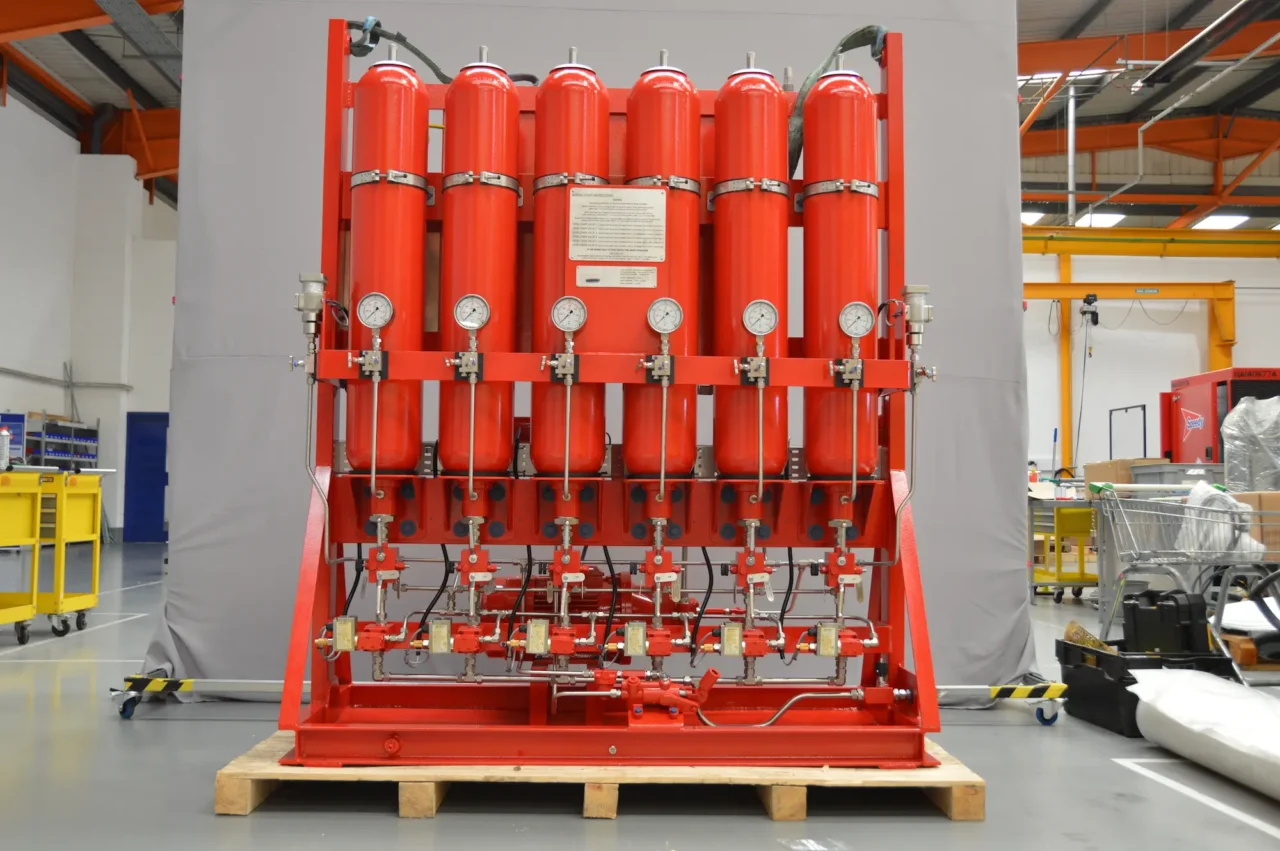
This is the hydraulic companion to our guides on how a hydraulic engine starter works and how to size an air starting system. A hydraulic starter cranks the engine on stored fluid pressure rather than compressed air, and that changes how you size the energy store behind it.
Why the Accumulator Is the Heart of the System
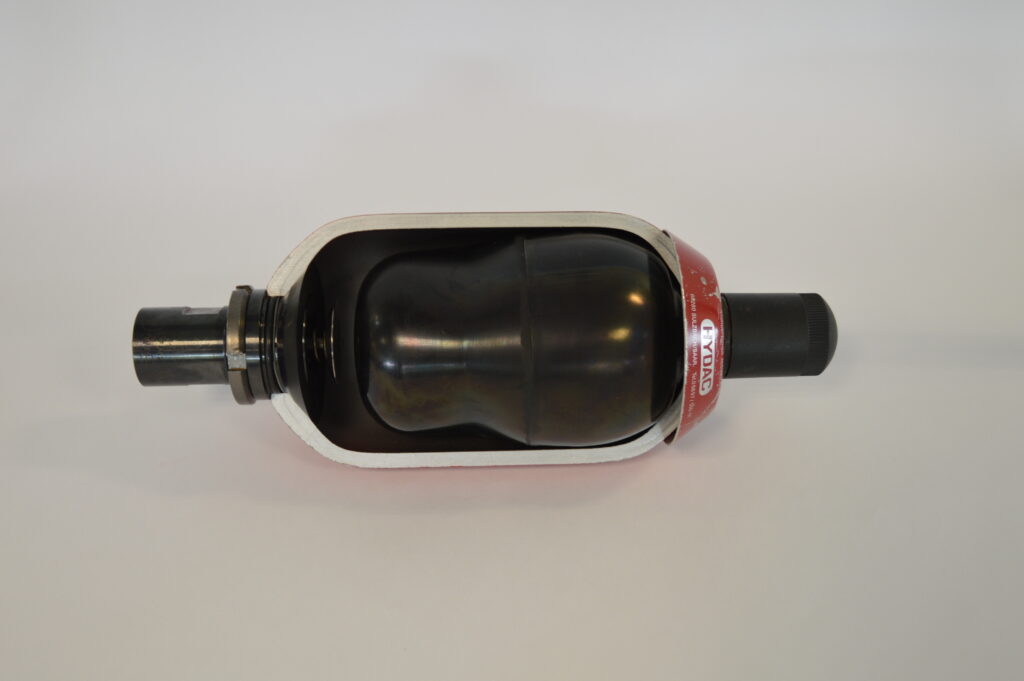
A hydraulic starting system has four main parts: a hydraulic starter motor, an accumulator that stores the energy, a pump that charges it (engine-driven, electric, or a hand pump for emergencies), and a fluid reservoir. The accumulator is where the start actually comes from. It holds hydraulic fluid under pressure against a cushion of nitrogen gas, and when you trigger a start it releases that fluid in a rapid, high-pressure burst that drives the starter motor and cranks the engine.
Get the accumulator wrong and nothing else matters. If it is too small, or set up badly, the starter will not get the volume of fluid it needs at the pressure it needs, and the engine slows before it fires. Sizing a hydraulic starting system is really about sizing that store.
In our experience, the accumulator is where hydraulic starting is most often under-specified. The pressure reads fine on the gauge, but there is not quite enough usable oil to see a cold, stubborn engine through to firing, and that only shows up on the day it matters.
The Four Numbers That Size a Hydraulic Starting System
1. System charge pressure
Hydraulic starting runs at high pressure, commonly around 200 to 210 bar. What matters for sizing is the band between that charge pressure and the starter's minimum working pressure, the point below which it will not deliver rated cranking torque. The accumulator only gives up useful fluid across that band. Below the starter's minimum, the pressure may still read on the gauge, but the torque is gone.
2. Oil used per crank
Each crank draws a volume of hydraulic fluid through the starter, set by the starter's displacement and how long it cranks. That figure is on the starter datasheet, quoted in litres. It is the hydraulic equivalent of air consumption: the fluid used in a single start is the flow through the starter multiplied by the crank time.
3. Cranks before recharge
As with any starting system, you size for the number of consecutive attempts you need before the pump catches up, not for one. Hydraulic systems are frequently sized to give around ten seconds of continuous cranking, and critical installations split the store across more than one accumulator for redundancy. A real advantage of hydraulic starting is the hand pump: even with no power at all, an operator can recharge the accumulator by hand and start the engine.
4. Accumulator capacity and pre-charge
Here is the catch with accumulators: only a fraction of their volume is usable fluid. A high-pressure gas accumulator typically gives up only about a quarter to a third of its nominal volume as usable oil across a normal starting pressure band. The nitrogen pre-charge sets that. For energy storage, a bladder accumulator is pre-charged to roughly 90% of the starter's minimum working pressure, and a piston accumulator to about 97%. Set the pre-charge too high and the accumulator holds too little fluid; set it too low and it over-fills and can damage itself.
Rule of thumb: pre-charge a bladder accumulator to about 90% of the starter's minimum working pressure, and expect only around a quarter to a third of the accumulator's nominal volume to be usable cranking fluid. Size the nominal volume up from there.
A Worked Example
Say you are sizing the accumulator for a hydraulic starter on a mid-size diesel. The datasheet and the application give you these figures (illustrative values, use your own datasheet in practice):
| Parameter | Value |
|---|---|
| Oil used per crank | 2 litres |
| Consecutive cranks required | 3 |
| Total usable oil needed | 6 litres |
| System charge pressure | 210 bar |
| Starter minimum working pressure | 140 bar |
| Bladder pre-charge (~90% of minimum) | ~125 bar |
| Usable fraction of accumulator | ~30% |
| Required accumulator capacity | ~20 litres (e.g. 2 × 10 L) |
The method mirrors any stored-energy sizing. Work out the fluid used per crank, multiply by the number of cranks to get the usable oil you need, then divide by the accumulator's usable fraction to get the nominal capacity. Set the nitrogen pre-charge to about 90% of the starter's minimum working pressure, and round the capacity up with margin for temperature and cold starts.
When Hydraulic Starting Fits
Hydraulic starting comes into its own in a few clear situations:
- Hydraulic power is already on the machine, so the starting system can share an existing supply.
- You need very high cranking torque from a compact, rugged unit, which is where hydraulic motors excel.
- The environment is hazardous, where a starter with no electrical or spark source is a real advantage.
- You want a fully manual backup, using a hand pump to recharge the accumulator with no power at all.
It is a mainstay on mobile plant, and across marine, oil and gas and mining engines where torque and reliability matter more than anything.
Sizing for Critical Applications
On fire pumps, offshore platforms and remote engines, size for the worst case rather than a warm test start. That usually means charging to the top of the pressure band for maximum stored energy, splitting the volume across two accumulators so a single fault cannot disable starting, keeping a hand pump in the system as an independent manual means of starting, and adding crank margin for cold, worn or reluctant engines. It is the same reliability thinking that puts non-electric starting on critical engines in the first place.
Hydraulic Starters in the Powerstart Range
Powerstart's M-Series hydraulic starters crank the engine from stored accumulator pressure, with a torque range spanning roughly 30 to 216 Nm, and are supplied with accumulators, hand pumps and complete mini-pack systems built around them. Explore the full hydraulic starter range to match a unit and an accumulator to your engine, or talk to us about sizing the system.
Hydraulic Starting System FAQs
How does a hydraulic starting system store energy?
In an accumulator. Hydraulic fluid is held under pressure against a cushion of nitrogen gas, and when a start is triggered the fluid is released in a high-pressure burst that drives the hydraulic starter motor to crank the engine.
How do you size a hydraulic accumulator for engine starting?
Work out the fluid the starter uses per crank (from its datasheet), multiply by the number of consecutive cranks you need, then divide by the accumulator's usable fraction, typically about a quarter to a third of its nominal volume. Set the nitrogen pre-charge to around 90% of the starter's minimum working pressure.
What pressure does a hydraulic starter run at?
Hydraulic starting systems typically run at high pressure, commonly around 200 to 210 bar. Each starter also has a minimum working pressure, and the accumulator has to stay above it through the crank to deliver full cranking torque.
Can a hydraulic starter work without any power?
Yes. A hand pump lets an operator recharge the accumulator by hand, so the engine can be started with no battery, electrical supply or mains power available. That is a large part of why hydraulic starting suits emergency and remote engines.
Sizing a Hydraulic Starting System?
Tell us your engine make, model and cranking requirement, and we will specify the hydraulic starter and accumulator capacity together.
View Hydraulic Starters